Amit Tekwani
Managing Director and Financial Reporting Practice Leader

Reporting
We provide companies of all sizes with financial reporting services for stock-based compensation.
Valuation
Get fair value measurement and modeling for all sorts of equity-based awards and securities, whether business as usual or special circumstances.
Complex Securities Valuation
Equity Management
We provide comprehensive strategic and operational services that streamline your equity compensation program, improving operational continuity, reducing risk, and unlocking new efficiencies.
HR Advisory
Our HR advisory services provide the insight you need to improve program design, grant more equity, and tell a cleaner story in your proxy and financial statements.
CEO Pay Ratio
Resources
Dive into our library of publications on a wide range of stock-based compensation topics.
About Us
We’re dedicated to bringing insight, control, and expanded capability to your compensation strategy.
Finance is expected to deliver accurate and descriptive forward-looking estimates of compensation expense and shares used for basic/diluted EPS. Expectations are trending toward higher granularity and lower tolerance levels for unexplainable variances. But stock-based compensation, with all its moving parts, is a tough item to forecast.
We provide customized forecasting across all reporting categories of interest: expense, diluted EPS, basic EPS, tax windfalls and shortfalls, and new award designs being considered. Key components of our forecasting, budgeting, and variance analysis solutions include the following:
Compensation expense tracking
Future period compensation expense forecasting
Forecast to actual comparisons
Custom analysis needs
Basic and diluted shares forecasting
Tax settlement forecasting
Get better insight and avoid accounting surprises while staying firmly in control of your forecasting and budgeting process.
contact usSee Equity Methods’ results from the 2021 survey of plan sponsors and get our take on the issues that are top of mind for stock-based compensation.
COVID-19 is a reminder that scenario modeling across a range of possible outcomes is essential to avoiding surprises on the income statement.
In this webcast, we discuss the value of cohesive forecasting while providing practical advice to prevent variances and explain those that are unavoidable.
Like it or not, corporate finance and tax teams are now on the hook for forecasting excess tax benefits from stock-based compensation. Here’s a refresher on the current deferred tax model, along with perspectives on the different ways a tax settlement forecasting process can be designed.
Delivering forward-looking insight and analytics that steer internal decision-making is becoming as important as SEC reporting. In this issue brief, we discuss how finance functions are meeting these demands by building robust and flexible forecasts.

Managing Director and Financial Reporting Practice Leader

Amit Tekwani directs the financial reporting practice at Equity Methods. He has served as a consultant in both the valuation practice and the financial reporting practice, having assisted over 150 companies…
Read more
Managing Director, Financial Reporting Services
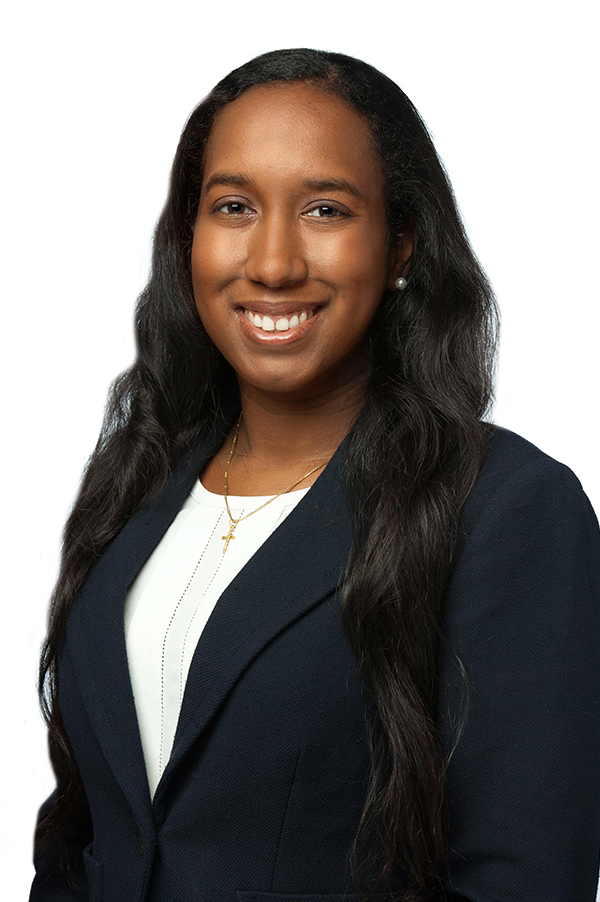
“I love working with clients and tackling their challenges head on. There’s nothing more satisfying than knowing we’ve developed solutions that make their lives easier.” Raenelle James is a managing…
Read more
Managing Director, Financial Reporting Services

“The best part of my job? Working with smart, driven people — within Equity Methods and amongst our clients.” Daniel Hunninghake is a director in Equity Methods’ financial reporting practice.…
Read moreAccounting for Awards in a Business Combination
Equity Award Modifications: Connecting the Theory to Practical Cases
Get Ready for Big Changes in Deferred Tax Accounting
Equity Compensation in Corporate Transactions
Tax Accounting for Equity Compensation Awards
Tax Settlement Forecasting: The Best Response to Income Statement Volatility
Managing Director and Financial Reporting Practice Leader
Managing Director, Financial Reporting Services
Managing Director, Financial Reporting Services

Managing Director, Financial Reporting Services
Amit Tekwani directs the financial reporting practice at Equity Methods. He has served as a consultant in both the valuation practice and the financial reporting practice, having assisted over 150 companies…
Read more
“I love working with clients and tackling their challenges head on. There’s nothing more satisfying than knowing we’ve developed solutions that make their lives easier.” Raenelle James is a managing…
Read more
“The best part of my job? Working with smart, driven people — within Equity Methods and amongst our clients.” Daniel Hunninghake is a director in Equity Methods’ financial reporting practice.…
Read moreAccounting for Awards in a Business Combination
Equity Award Modifications: Connecting the Theory to Practical Cases
Get Ready for Big Changes in Deferred Tax Accounting
Equity Compensation in Corporate Transactions
Tax Accounting for Equity Compensation Awards
Tax Settlement Forecasting: The Best Response to Income Statement Volatility

“It all seems impossible until it is done. Somehow, we always get it done.” As a managing director at Equity Methods, Radostin Kanev handles the intricacies of many of the…
Read moreEquity Awards in a Spinoff: Don’t Forget About the Data
Early Adopters Report for ASU 2016-09
FASB ASC 718 Revisions Survey Results
2018 State of the Union in Equity Compensation: Finance and Accounting Track
2017 State of the Union in Equity Compensation: Finance and Accounting Track